The dyno in the bay is why a tune here is a measurement rather than an opinion
A Dynojet 424xLC2 in house, front, rear, and all wheel drive, and a ceiling of 2000 horsepower.
CHAMELEON TUNING STAFFTurn your social into search
We turn your posts into editorial stories that bring new search traffic to chameleontuning.com. Three of yours will be on this page.
Book a demo
chameleontuning
A Dynojet 424xLC2 in house, front, rear, and all wheel drive, and a ceiling of 2000 horsepower.
CHAMELEON TUNING STAFFHow it works
Same as today. Nothing changes on Instagram.
We turn your post into a full story in your voice within the hour.
One click publishes it to chameleontuning.com. Nothing goes live without you.
Your stories
Nothing was published anywhere. You decide that. Every word will come from your own posts, your own photos and your own work.
Tuning · From your site
A Dynojet 424xLC2 in house, front, rear, and all wheel drive, and a ceiling of 2000 horsepower.
From your site
From your site
One social post becomes another searchable entry point to Chameleon Tuning.
Our own magazine. Clicks and citations from Google Search Console, as of September 15, 2026.
Draft story for chameleontuning.com · Tuning
A Dynojet 424xLC2 in house, front, rear, and all wheel drive, and a ceiling of 2000 horsepower.
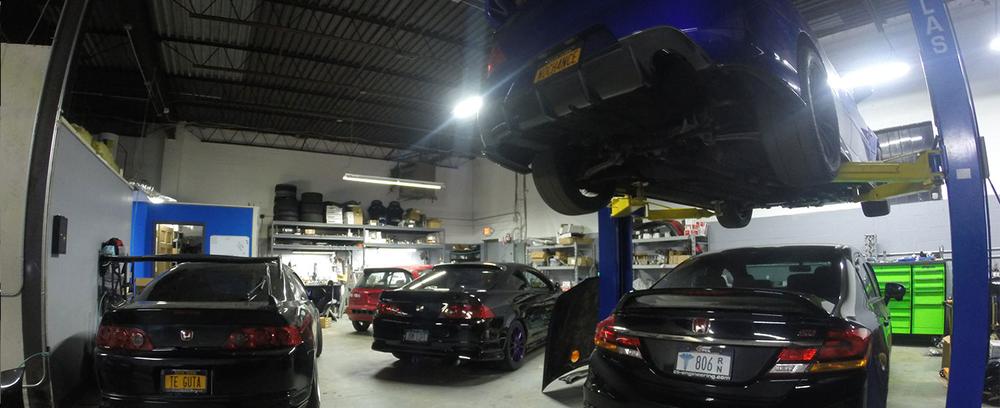
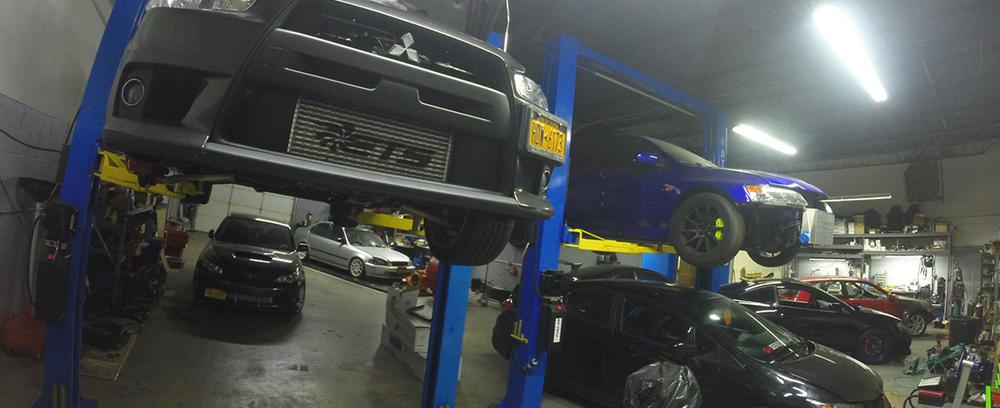
Two blue posts hold a sedan overhead with its exhaust hanging down and the floor clear underneath. Behind it an Evo sits on the second lift with bright green calipers showing through the wheels, and a row of Hondas and a white Civic fill the rest of the bay. Shelving down one wall, a tall tool chest at the end, everything under fluorescent light.
It looks like a workshop because it is one. The piece of equipment that actually defines the business is the dyno, and the reason is simple. Without one, a tune is a set of changes somebody believes made the car faster. With one, it is a number before and a number after.
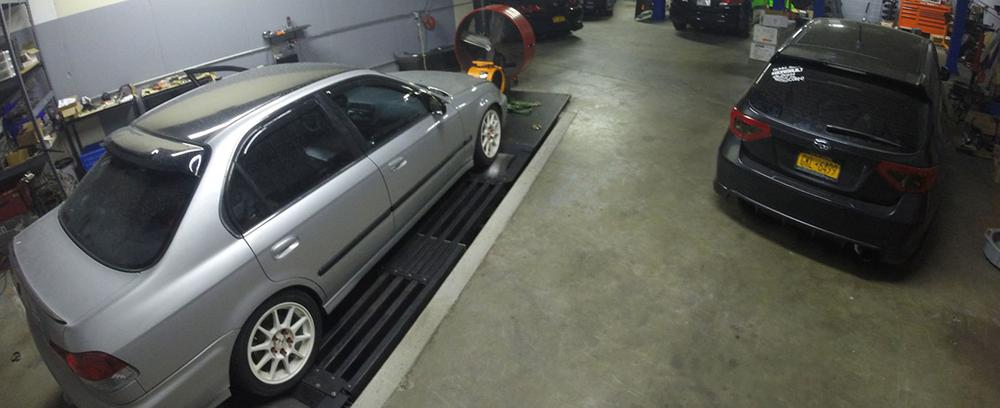
We run a Dynojet 424xLC2 in house, which handles rear wheel drive, front wheel drive, and all wheel drive applications and reads up to 2000 horsepower. That range covers effectively everything that comes through the door with room left over.
Having it on site rather than renting time somewhere changes the work. Calibration is iterative. You make a change, you measure, you make another. Booking a dyno by the hour pushes a tuner toward fewer, larger changes, which is the wrong direction for anything with an engine you care about.
Our strongest area is open source tuning for the Mitsubishi Evo 8, 9, and 10, plus Hondata platforms, built on more than ten years of EFI work.
A tune only goes as far as the hardware underneath it. More than ten years of assembling race engines sits behind that, with the tools and machining capability to check an engine is genuinely strong before anyone asks more of it.
That covers full long block assembly, rotating assembly balancing, and block sleeving. Those are the operations that decide whether a build survives, and they happen long before anything appears on a graph. A shop that can only map cannot tell you that your problem is mechanical, which is the most useful thing a tuner ever says.
Every one of us came into this as an enthusiast with a car and not much else. We love racing and cannot see ourselves doing anything else, and fifteen years in, the learning has not stopped.
That matters more in this trade than in most. Platforms change, software changes, and what worked on a car five years ago is not automatically right today. Staying current is the job rather than a bonus.
We are on Arctic Avenue in Islip, Unit 4. Bring the car, run a baseline, and then decide what to change. Everything after that is arithmetic.
Draft story for chameleontuning.com
Draft story for chameleontuning.com
Keep reading